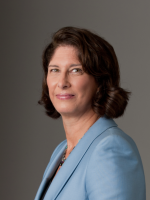
AYESHA RASCOE, HOST:
It's Labor Day weekend, and with Election Day just 58 days away, it's time for all the candidates to eat their Wheaties, grab their water bottles and buckle up. The rest of us could probably stand to do that too. Joining me now is NPR senior national political correspondent Mara Liasson. Good morning, Mara.
MARA LIASSON, BYLINE: Good morning.
RASCOE: This is not a presidential election year, and yet the Republican National Committee is holding a convention in Dallas in just a few days. No one's getting formally nominated at it, s? o what's the goal of this event?
LIASSON: Well, it's not really a convention as we know them. It's a Trump rally, and on Truth Social a few months ago, Donald Trump called it that. He said it would be a rally like none other. But despite that hype, not all Republican candidates are going to be there or want to be there, especially ones who are locked in very tight races. They'd rather spend their time back home campaigning. And given how unpopular the president is, how unpopular his war in Iran is and tariffs and his strong support of data centers - which are very unpopular with Democrats and Republicans - for a lot of Republican candidates, it's not helpful for them to be seen with Trump.
RASCOE: But many of these candidates do need money to spend on their campaigns, and doesn't President Trump have a lot of that that he could give them?
LIASSON: Absolutely. And until now, he hasn't been spending it freely on Republican candidates, but here's what he said in the Oval Office on Friday when he was asked about that.
(SOUNDBITE OF ARCHIVED RECORDING)
PRESIDENT DONALD TRUMP: I think I have, like, a - close to a billion dollars in the super PAC, and I'm allocating probably four or $500 million. So I'll be spending - we'll be spending...
UNIDENTIFIED REPORTER: For the midterm election?
TRUMP: Yeah. We're going to spend a lot of money because we don't want to lose our country.
LIASSON: And yesterday, MAGA Inc., which is the Trump super PAC, did make a $10 million ad buy to support Texas Attorney General Ken Paxton in his Senate bid. And Trump's general strategy for the midterms - we'll see this in the convention - is to put himself front and center. He said to people, pretend I'm on the ballot. He thinks Republicans do better when he's on the ballot, but not all Republican candidates agree with that.
RASCOE: Mara, you just mentioned the headwinds against Republican candidates. But what do voters say are their concerns about Democratic candidates?
LIASSON: Well, that's true. You know, as gloomy as some in the Republican Party are about their prospects this fall - not just about possibly losing the House, but also possibly losing the Senate - Democrats are facing problems of their own.
And we're seeing this play out in Michigan, where Abdul El-Sayed, who is the Democratic Senate nominee - he has been struggling to unify his own party coalition behind him. Last week he apologized to a group of Jewish Democrats in Michigan over comments he made about the man who attacked a preschool at a synagogue near Detroit earlier this year. The perpetrator had lost family members in an Israeli airstrike in Lebanon, and Dr. El-Sayed said he made a mistake when he said, quote, "hurt people hurt people," so soon after the attack. He said he should've just condemned the attack on the preschool.
And of course, this is giving plenty of fuel to Republicans. Vice President Vance was at an event in Michigan to support El-Sayed's rival, Mike Rogers, and he said this...
(SOUNDBITE OF ARCHIVED RECORDING)
JD VANCE: There's something about Abdul El-Sayed that is very, very evil and on the rise in the United States of America today. And it's people who see themselves not as citizens of a common nation.
LIASSON: Of course, what's interesting about this is that Vice President Vance has also been spending time trying to fix his own problems with Jewish voters and donors, just like El-Sayed. They are an important part of the Republican coalition.
RASCOE: And what problems are those exactly?
LIASSON: Jewish voters and donors are an important part of the Republican coalition, just like they are an important part of the Democratic coalition. And they are worried about Vance making a peace deal with Iran that would not be good for Israel. They're also worried about his close connection with Tucker Carlson, who has repeatedly criticized Israel and has had white nationalist Nick Fuentes on his show, as well as other Holocaust deniers.
And last week, Vance gave a speech in Las Vegas at the Republican Jewish Coalition. He's trying to mend some of those fences. He said that he doesn't agree with Carlson on everything, but he's not going to throw him under the bus. The reason why this is so important is because Vance is widely expected to be laying the groundwork for a bid for the White House in 2028.
RASCOE: Finally, Massachusetts held its primary last week, and, spoiler, the 80-year-old incumbent Democratic senator won, as did two congressmen in their 70s. So what does this tell us?
LIASSON: That's right. Progressive Senator Ed Markey beat Representative Seth Moulton, his much younger challenger, by 30 points. And then Representative Stephen Lynch beat his millennial challenger by 11 points. Richard Neal, another Democratic incumbent, also won against a younger challenger. So maybe this tells us that Massachusetts just likes older Democrats. Or it tells us that the narrative that Democrats are looking for generational change across the board in every race is just not correct. The results of the Democratic primaries have really been a mixed bag this year.
RASCOE: That's NPR's senior national political correspondent Mara Liasson. Thank you, Mara.
LIASSON: Thank you. Transcript provided by NPR, Copyright NPR.
NPR transcripts are created on a rush deadline by an NPR contractor. This text may not be in its final form and may be updated or revised in the future. Accuracy and availability may vary. The authoritative record of NPR’s programming is the audio record.